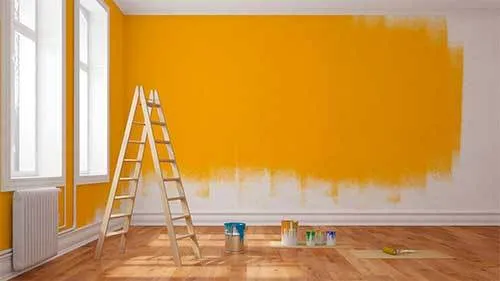
Late spring through early fall is the outdoor painting season in the Bronx. Winters are cold with repeated freeze and thaw, summers are hot and humid, and rain falls in every month of the year.
What is the best time of year to paint the outside of a house here?
The best months are roughly May through October. Days are warm enough for paint to cure, and nights stay above the minimum on the can.
Late spring and early fall are the sweet spots: mild, less humid and without the heat of July and August. Summer works well too if the painter avoids hot walls and watches for afternoon thunderstorms. Early spring and late fall are possible on mild dry days with the right product.
Can you paint outside when it is raining or about to rain?
No. Paint should not go on in rain, on a wet surface or when rain is due before the paint can set.
We check the forecast each morning and plan the day around it. Prep such as scraping can sometimes go on under cover. Paint waits.
It rained a few hours after painting. Is it ruined?
Usually not. If the paint had a few hours to dry before it rained, most modern acrylics come through fine.
A hard downpour on paint that is still wet can leave streaks, spots or washed out areas. Those sections are sanded lightly when dry and recoated. Look the walls over the next day.
How long after rain before siding can be painted?
Wait until the surface is fully dry. After it rains, that is often a day for siding in sun and wind, and longer for shaded walls, bare wood and masonry.
Wood has to dry out before it takes paint, not just look dry. The same goes for power washing: allow a day or two of dry weather after the wash. A moisture meter takes out the guesswork.
How cold is too cold to paint outside?
It is too cold when the air or the wall is below the minimum on the paint label. For many exterior acrylics that is 50 degrees. Some are made to go on down to 35.
The wall and the night matter as much as the afternoon. A sunny 55 degree day in November can be followed by a night near freezing, and paint that has not set by then will not cure properly. That is why the outdoor season in the Bronx mostly ends in late fall.
How hot is too hot, and is direct sun a problem?
It is too hot when the surface is hot to the touch, and yes, direct sun is a problem. Paint on a hot wall dries before it can level and bond, which causes lap marks and blisters.
Dark surfaces and metal get far hotter than the air. In summer we follow the shade around the house: the west side in the morning, the east side in the afternoon.
Does humidity affect exterior painting in New York?
Yes. High humidity slows drying, and morning dew can spoil paint put on late in the day.
In a humid New York summer we start after the dew has burned off and stop early enough for the last coat to set before evening.
Does salt air change how you paint near the water?
Yes. On City Island, in Throgs Neck and along the shore, salt settles on walls and holds moisture. Paint put on over salt does not bond well.
The surface is washed with fresh water and left to dry first. Nails and railings need rust treatment and the right primer.
Can you paint inside in winter with the windows closed?
Yes. Interior painting works well in winter, and you can keep the windows closed or just cracked open. Modern water based paints are low in odor, and heated indoor air helps them dry.
Winter is a good time for apartments. Steam heat keeps Bronx buildings warm and dry. Painters are also less busy than in the summer, which can make scheduling easier.
Can decks and fences be stained in spring or fall?
Yes, as long as the wood is dry and the temperature is within the range on the can. Spring and early fall are good for stain because the wood is not hot and the stain soaks in evenly.
To plan an exterior job for the coming season, call or text (718) 866-3263.